Showing posts with label wage theft. Show all posts
What Should Be Discussed Instead of Certification at #SHRM14
by Matthew Stollak on Tuesday, June 17, 2014

The SHRM Big Show begins in less than a week as 15,000+ HR professionals descend on Orlando to hear about the latest in human resource management. Unless you are a HR professional living under a rock, the topic du jour(s) will be the new SHRM certification being introduced....you won't be able to escape it. SHRM will have 3 straight days of sessions dedicated to the topic. HRCI, while banished from the conference, will be holding a Monday night event at EPCOT to share there insights. Vegas has put better odds of snow occurring during the four days in Orlando than Hank Jackson NOT discussing certification during the opening session. I fully expect that SHRM will hand out an HR action figure called "Certy" to attendees at their booth in the exhibit hall.
Never has so much attention been paid to an issue that has so little impact on the day-to-day functioning of HR.
I wish a modicum of attention was paid to these issues instead:
1. Sleep
Did you hear about the accident that nearly killed TV star Tracy Morgan? It was the result of a Walmart truck driver who had gone more than 24 hours without sleeping. According to Teamsters President James P. Hoffa, "drivers feel pressure from their employers to drive more than 60-70 hours a week with insufficient rest." Further, Congress is attempting to make regulation of truck driver rest even more lax:
Days before Morgan's accident thrust trucking safety into the news, the Senate Appropriations Committee approved legislation that would undo rules that only went into effect last year that mandated certain rest periods for truck drivers. Sen. Susan Collins (R-Maine) added an amendment to the Transportation, Housing and Urban Development bill that would suspend a regulation that truck drivers rest for 34 consecutive hours, including two nights from 1:00 AM to 5:00 AM, before driving again.
Issues involving sleep are not limited to the trucking industry. As a parent of 15-month old twins, getting 6+ hours of uninterrupted sleep is a luxury. The impact of less sleep is huge:
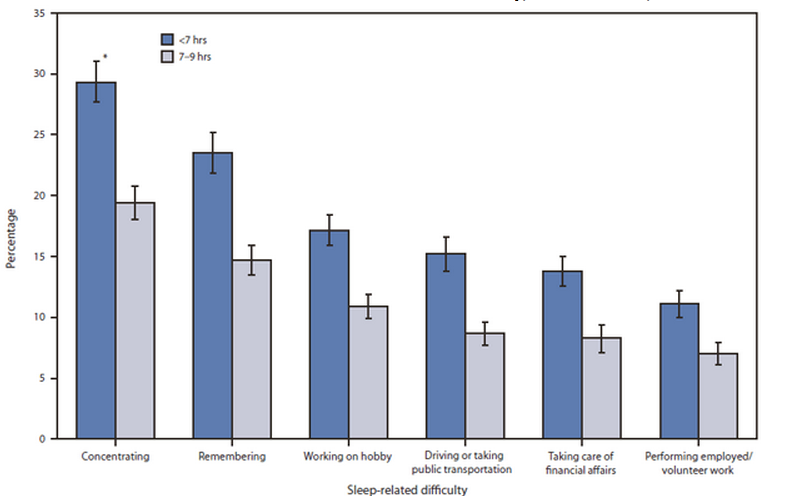
Instead of certification, we should be discussing how the profession can assist employees in ensuring they are properly rested so they may perform at a more productive level.
2. Wage Theft

According to the New York Times,
When wage theft against low-wage workers is combined with that against highly paid workers, a bad problem becomes much worse. Data compiled by the Economic Policy Institute show that in 2012, the Department of Labor helped 308,000 workers recover $280 million in back pay for wage-theft violations — nearly double the amount stolen that year in robberies on the street, at banks, gas stations and convenience stores.
Moreover, the recovered wages are surely only a fraction of the wage theft nationwide because the Labor Department has only about 1,100 wage-and-hour investigators to monitor seven million employers and several states have ended or curtailed wage enforcement efforts.
This is a huge black eye for the profession, and we should be discussing how to minimize this occurrence.
3. A Living Wage
My wonderful blogging colleagues at SHRM14 are putting together a little charity event on Sunday night to raise money for No Kid Hungry. It truly is a worthy endeavor.
At the same time, how much discussion is going into their Congressional representatives cutting funding for Temporary Assistance for Needy Families? Or, eliminating unemployment benefits after a certain period of time, even when unemployment remains high. Each contribute significantly to childhood hunger.
Recently, Seattle passed a minimum wage increase of $15 an hour. Given HR's role in setting compensation, what influence, if any, should they have to address the impact of wage stagnation?
- 3 comments • Category: #HRCI, #shrm14, certification, living wage, Orlando, sleep, wage theft
- Share on Twitter, Facebook, Delicious, Digg, Reddit


What would happen if HR truly operated in a truly capitalistic society where everyone is a rational actor?
In such a world, there would be a plethora of choices and perfect information about which choice to make. Needs would be addressed quickly as businesses operate to fill that vacuum at maximum profitability. Employees will find those organizations which put together the optimal compensation package with the appropriate work/life balance. On the other side, companies will try to maximize employment with the best combination of knowledge, skills, and abilities at the lowest wages they can. Equilibrium will always be reached where supply meets demand. Consumers, companies and workers will choose the option that is most appropriate to their lifestyle. Government will not interfere and "distort" the playing field.
What would this mean for HR?
- Would nepotism disappear as it would be viewed as an inefficient way to find talent, or is it, on certain occasions, a politically expedient choice?
- Would all salaries become public knowledge, as pay secrecy leads to imperfect information
- Would negotiation and pay unfairness become a thing of the past as all parties enter the contract with perfect information?
- Would there be a need for training as firms would only hire those who had the proper qualifications and skills to do the job correctly?
- Would there be a need for safety committees or OSHA, as taking shortcuts, in the long run, would be inefficient?
- Would wellness initiatives disappear, as employees make the right choice in diet and exercise?
- Would performance appraisals be done frequently to address any problems that arise, instead of waiting to be done annually?
As a result, we get wage theft. We get industrial accidents in West, Texas and Bangladesh.
How would you see HR changing in a truly capitalistic society?
- One comment • Category: capitalism, nepotism, OSHA, performance appraisal, politics, rational actor., salaries, wage theft
- Share on Twitter, Facebook, Delicious, Digg, Reddit