Showing posts with label #HRCI. Show all posts
What Should Be Discussed Instead of Certification at #SHRM14
by Matthew Stollak on Tuesday, June 17, 2014

The SHRM Big Show begins in less than a week as 15,000+ HR professionals descend on Orlando to hear about the latest in human resource management. Unless you are a HR professional living under a rock, the topic du jour(s) will be the new SHRM certification being introduced....you won't be able to escape it. SHRM will have 3 straight days of sessions dedicated to the topic. HRCI, while banished from the conference, will be holding a Monday night event at EPCOT to share there insights. Vegas has put better odds of snow occurring during the four days in Orlando than Hank Jackson NOT discussing certification during the opening session. I fully expect that SHRM will hand out an HR action figure called "Certy" to attendees at their booth in the exhibit hall.
Never has so much attention been paid to an issue that has so little impact on the day-to-day functioning of HR.
I wish a modicum of attention was paid to these issues instead:
1. Sleep
Did you hear about the accident that nearly killed TV star Tracy Morgan? It was the result of a Walmart truck driver who had gone more than 24 hours without sleeping. According to Teamsters President James P. Hoffa, "drivers feel pressure from their employers to drive more than 60-70 hours a week with insufficient rest." Further, Congress is attempting to make regulation of truck driver rest even more lax:
Days before Morgan's accident thrust trucking safety into the news, the Senate Appropriations Committee approved legislation that would undo rules that only went into effect last year that mandated certain rest periods for truck drivers. Sen. Susan Collins (R-Maine) added an amendment to the Transportation, Housing and Urban Development bill that would suspend a regulation that truck drivers rest for 34 consecutive hours, including two nights from 1:00 AM to 5:00 AM, before driving again.
Issues involving sleep are not limited to the trucking industry. As a parent of 15-month old twins, getting 6+ hours of uninterrupted sleep is a luxury. The impact of less sleep is huge:

Instead of certification, we should be discussing how the profession can assist employees in ensuring they are properly rested so they may perform at a more productive level.
2. Wage Theft

According to the New York Times,
When wage theft against low-wage workers is combined with that against highly paid workers, a bad problem becomes much worse. Data compiled by the Economic Policy Institute show that in 2012, the Department of Labor helped 308,000 workers recover $280 million in back pay for wage-theft violations — nearly double the amount stolen that year in robberies on the street, at banks, gas stations and convenience stores.
Moreover, the recovered wages are surely only a fraction of the wage theft nationwide because the Labor Department has only about 1,100 wage-and-hour investigators to monitor seven million employers and several states have ended or curtailed wage enforcement efforts.
This is a huge black eye for the profession, and we should be discussing how to minimize this occurrence.
3. A Living Wage
My wonderful blogging colleagues at SHRM14 are putting together a little charity event on Sunday night to raise money for No Kid Hungry. It truly is a worthy endeavor.
At the same time, how much discussion is going into their Congressional representatives cutting funding for Temporary Assistance for Needy Families? Or, eliminating unemployment benefits after a certain period of time, even when unemployment remains high. Each contribute significantly to childhood hunger.
Recently, Seattle passed a minimum wage increase of $15 an hour. Given HR's role in setting compensation, what influence, if any, should they have to address the impact of wage stagnation?
- 3 comments • Category: #HRCI, #shrm14, certification, living wage, Orlando, sleep, wage theft
- Share on Twitter, Facebook, Delicious, Digg, Reddit


New #SHRM Certification Raises More Questions Than It Answers (Update X 2)
by Matthew Stollak on Monday, May 12, 2014
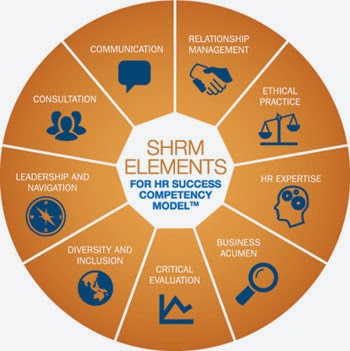
The big news from SHRM HQ on Monday was the announcement of the creation of a new certification program for HR professionals.
While the SHRM online staff discuss the details of the competency program, it was unfortunately very short on details regarding a whole host of questions.
What happens to current professionals who hold PHR/SPHR/GPHR certification? While SHRM CEO Hank Jackson states that a clear path for currently certified individuals to the new model is in the works, as someone who just spent considerable time recertifying, I'm curious as to what this path holds. Will we have to take the new exam? Will we have to pay a fee for this exam?
Further, you have many professional chapters and state councils trying to develop programming for monthly meetings and state conferences. While SHRM indicates they will support the PHR and SPHR certification until January 2015, many chapters are already planning programming for the 2015 year. As the availability of earning recertification credit is often a strong driver for attendance, will certified professionals continue to push on hoping that SHRM will work it out, or will they wait it out until more answers are forthcoming?
What happens to those HR professionals who are getting ready to take the exam? I already know at least one person who is questioning whether or not to take the exam next month, after spending significant money and time preparing. Will SHRM be refunding those who spent money on the SHRM Learning System? What happens to PHR prep courses many chapters will be offering in the fall?
What happens to the Assurance of Learning exam? Less than 5 years ago, the HRCI made major changes regarding eligibility for the PHR exam - individuals must have two years of exempt level experience prior to taking the test. Several years have gone into developing an alternative, the Assurance of Learning exam, so that students could demonstrate their had a strong understanding of the HR body of knowledge.
However, given that the competency model will be focusing on behavioral proficiency at four different professional levels, including "entry," does the exam go away? Do I continue to promote it to my students (as student chapters get credit for such action on the merit award)?
Why announce now? Usually such an announcement would be made with a big splash at the SHRM Annual Conference next month. Perhaps SHRM wanted to get ahead of it early, so questions such as the above, can be asked and answered, and a more detailed plan will be made clear then.
In any case, I will be waiting with bated breath for answers.
UPDATE: The Human Resource Certification Institute (HRCI) has issued a statement here.
The new HR certification is based on the SHRM HR Competency Model,
which consists of nine primary competency domains defined with
behavioral proficiency standards across four professional levels –
entry, middle, senior and executive. The new certification is focused
on teaching and testing practical, real-life information that HR
professionals need to excel in their careers. - See more at:
http://www.shrm.org/Publications/HRNews/Pages/SHRM-Certification.aspx#sthash.bHwElfJe.dpuf
SHRM has provided an updated and FAQ here.UPDATE 2: SHRM will allow those currently certified to transition to the new certification free of charge. To do so, one must have proper certification documentation, sign the SHRM Code of Ethics, and complete an online educational module on HR competencies. More details here
From
Jan. 1-Dec. 31, 2015, SHRM will allow those with HR certification from
other organizations to convert to the new credential free of charge.
Doing so requires showing documentation that the certification is
current, signing the SHRM code of ethics and completing an online
educational module on HR competencies. - See more at:
http://www.shrm.org/Publications/HRNews/Pages/New-SHRM-Certification.aspx#sthash.zRgqnFv9.LKyfDdEb.dpuf
The new HR certification is based on the SHRM HR Competency Model, which consists of nine primary competency domains defined with behavioral proficiency standards across four professional levels – entry, middle, senior and executive. The new certification is focused on teaching and testing practical, real-life information that HR professionals need to excel in their careers. - See more at: http://www.shrm.org/Publications/HRNews/Pages/SHRM-Certification.aspx#sthash.bHwElfJe.dpuf
The new HR certification is based on the SHRM HR Competency Model, which consists of nine primary competency domains defined with behavioral proficiency standards across four professional levels – entry, middle, senior and executive. The new certification is focused on teaching and testing practical, real-life information that HR professionals need to excel in their careers. - See more at: http://www.shrm.org/Publications/HRNews/Pages/SHRM-Certification.aspx#sthash.bHwElfJe.dpuf
- 17 comments • Category: #certification, #HRCI, #SHRM
- Share on Twitter, Facebook, Delicious, Digg, Reddit

In the wake of the HuffPost Top 100 Most Social HR Experts list, and the significant number on the list who do not have HR certification, was a comment made by one of those top 100 members:
As a recruiting practitioner I really see no value personally or professionally in being a SHRM member or gaining a certificate. Unless someone could give me a really good reason to the contrary.
Certainly, if one goes to the Human Resource Certification Institute (HRCI) website, the benefits are laid out:
- show you know the most current principles and core practices of HR management
- become more marketable when you compete for top HR positions
- raise your professional confidence among your staff and your peers
- certified HR professionals earn 13.2% higher salary than their non-certified peers
- organizations with certified HR professionals have 12.2% greater retention of high performing employees
- organizations with certified HR professionals have 14.6% less EEOC complaints than organizations led by non-certified HR leaders
With the increasing popularity of the SHRM certification program as well as the proliferation of other similar certifications, it is time to determine (1) what certification measures and how well it does it; and (2) what difference having certification makes to individuals, to organizations, and to the HR profession.
To answer the above, and as the title of their article suggests, Lengnick-Hall and Aguinis create a multi-level framework for research shown in the figure below:

The figure depicts three important elements: (a) time, (b) macro-level effects, and (c) micro-level effects. First, the starting time begins with the implementation of the organizational staffing practice of using HR certification as a selection tool. This staffing practice represents a contextual (top-down) effect on the organization's individual KSAOs because all potential HR professional employees will be recruited using the HR certification predictor. HR certification is used as a selection tool because it measures human resource management knowledge
Accompanying the figure are 14 testable propositions, including:
- Proposition 2: Individuals with undergraduate or master's degrees in human resource management or related disciplines will not benefit as much (increased hiring probability, higher salaries, and faster promotion rates) from an HR certification compared to individuals without such degrees
- Proposition 3: As assessed by longitudinal research, we predict that individuals with undergraduate or master's degrees in human resource management or master's degrees in business administration will obtain more C-suite positions and perform more effectively in these roles compared to individuals who have certifications such as SHRM's PHR or SPHR
- Proposition 4: Using HR certification as a selection tool will be positively associated to individuals' HR management knowledge
- Proposition 5: Certified HR professionals will perform better (i.e. effectively diagnose and resolve HR problems, design and implement HR programs aligned with organizational objectives, etc.) on the job than do non-certified HR professionals
- Proposition 6: A greater proportion of certified HR professionals who have shared HR knowledge in an HR department will lead to higher unit-level performance
- Proposition 11: A greater proportion of certified HR professionals in the HR function will lead to more favorable perceptions by multiple constituents regarding the value-added contribution of the HR function in the organization and thereby enhance HR department reputation
- Proposition 13: A greater proportion of certified HR professionals in an HR department will lead to higher HR department effectiveness
Certainly, answering the propositions listed will be a difficult process, and perhaps this is why such research is lacking. As Cohen (2012) notes in the same issue:
In order to test Proposition 2, data would need to be collected from a single huge organization with a large enough population of HR professionals who are covered by the same compensation plan to test the proposition. You would need archival data of salary trends, certification status, educational achievements, promotions, performance data, and so forth to comparatively test for the differences in salary and advancement. A study of just HR professionals, outside of the archival factors mentioned many not provide accurate or generalizable information. Titles may or may not be comparable across organizations so unless the data comes from a single organization where title, responsibility and other variables can be controlled, the results may not reveal anything meaningful.
Nonetheless, these questions are of critical importance to the profession, and I echo Aguinis and Lengnick-Hall's (2012) challenge to the SHRM Foundation: Issue a call for proposals for empirical research on the value of HR certification.